) (1).png)
24 September 2026
The First 40 Days: Why Jaapa Care Is About the Mother’s Recovery — Not Just the Baby
Childbirth is celebrated as a joyful beginning. For a woman’s body, it marks the start of a critical recovery phase.
Whether the delivery was normal or by C-section, the first 40 days after birth — traditionally called the Sutika period — determine a mother’s long-term physical and emotional health. Ignoring this phase doesn’t just delay recovery; it creates problems that surface months or even years later.
Most families pour all their energy into the newborn and assume the mother will “manage.”That assumption is costly.
At Monica Placement Agency, we treat Jaapa Care as essential postnatal support — not an optional luxury. Here’s why these first 40 days require a trained and experienced Jaapa specialist, not just extra household help.
1. The “Strong Mother” Myth
Many new mothers push themselves to function as if nothing has changed — managing guests, housework, night feeds, and emotional pressure all at once. This is not strength; it is overload.
The reality:
Severe sleep deprivation disrupts hormonal balance, weakens immunity, and slows physical healing.
How Jaapa Care helps:
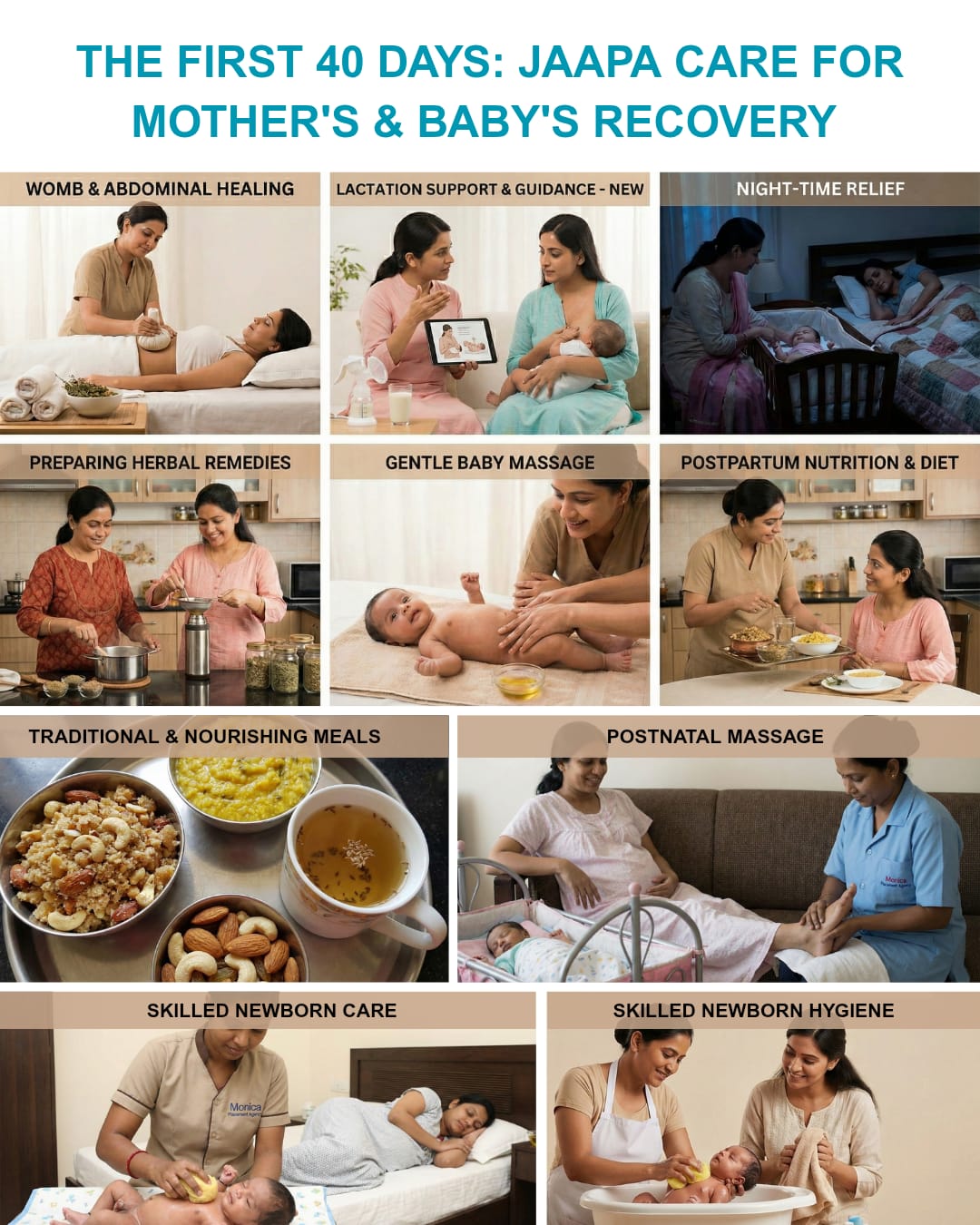
A trained and experienced Jaapa caregiver takes responsibility for night-time baby care, soothing, and monitoring. This allows the mother to get uninterrupted, restorative sleep — a non-negotiable requirement for recovery.
2. Postnatal Massage Is Not Just a Ritual
There is a significant difference between oil rubbing and therapeutic postnatal massage.
A trained Jaapa specialist performs womb involution and circulation-focused massage designed specifically for the postpartum body.
Why it matters:
Correct techniques help: -
- The uterus return to its original size
- Reduce swelling and water retention
- Improve blood flow and muscle recovery
The risk:
Incorrect pressure or poor technique can worsen pain, strain healing tissues, and delay recovery. This is why training matters.
3. Nutrition That Supports Healing, Not Just Appetite
After childbirth, digestion is weak and unpredictable. Eating “normally” or eating randomly can lead to bloating, weakness, poor lactation, joint pain, and discomfort for both mother and baby.
Traditional Jaapa nutrition is structured and intentional. Each food serves a recovery purpose.
Key foods and their benefits:
Panjeeri (Panjeri / Gond Panjeri)
A traditional postnatal preparation made with gond, dry fruits, desi ghee, and warming spices.
Benefits: Restores strength, supports tissue repair, improves lactation, and helps combat postpartum fatigue.
Khichdi (Moong dal khichdi)
Light, nourishing, and easy to digest.
Benefits: Provides protein and energy without straining digestion; ideal during the early recovery days.
Ajwain (Carom seeds)
Improves digestion, reduces gas and bloating, supports uterine cleansing, and helps prevent colic in breastfed babies.
Jeera (Cumin)
Supports digestion, reduces water retention, and is traditionally known to aid breast milk production.
Saunf (Fennel seeds)
Calms the digestive system, reduces acidity, and supports healthy lactation.
Methi (Fenugreek)
Traditionally used to support milk supply and improve metabolism during postpartum recovery.
Dry fruits (Almonds, Cashews, Dates, Raisins)
Provide iron, healthy fats, and natural energy essential for recovery and milk quality.
Desi ghee (in controlled quantities)
Supports joint lubrication, tissue healing, and nutrient absorption when consumed appropriately.
Warm soups, porridges, and broths
Hydrating, gentle, and nourishing — especially important when appetite is low.
Traditional Jaapa care avoids cold, fried, and heavy foods during the early postpartum phase, allowing the digestive system to heal rather than struggle.
Our caregivers ensure the mother eats for recovery, strength, and stable lactation — not just to satisfy hunger.
4. Newborn Care Requires Skill, Not Guesswork
For new parents, uncertainty is constant — every cry feels urgent.
Professional Jaapa care ensures that newborn handling is safe, gentle, and appropriate to the baby’s age and condition.
Our Jaapa caregivers are trained and experienced in:
- Newborn hygiene and correct handling techniques
- Umbilical cord stump care
- Safe and temperature-appropriate bathing
- Gentle, age-appropriate baby massage using correct oils and pressure
- Identifying early signs of jaundice, dehydration, or feeding difficulties
Just as important, they provide calm, experienced support during night hours — preventing panic, overstimulation of the baby, and emotional exhaustion within the household.
If you're planning postpartum care or supporting a new mother, speak to our team to understand what professional Jaapa care involves.
.png)
) (1).png)