) (1).png)
24 September 2026
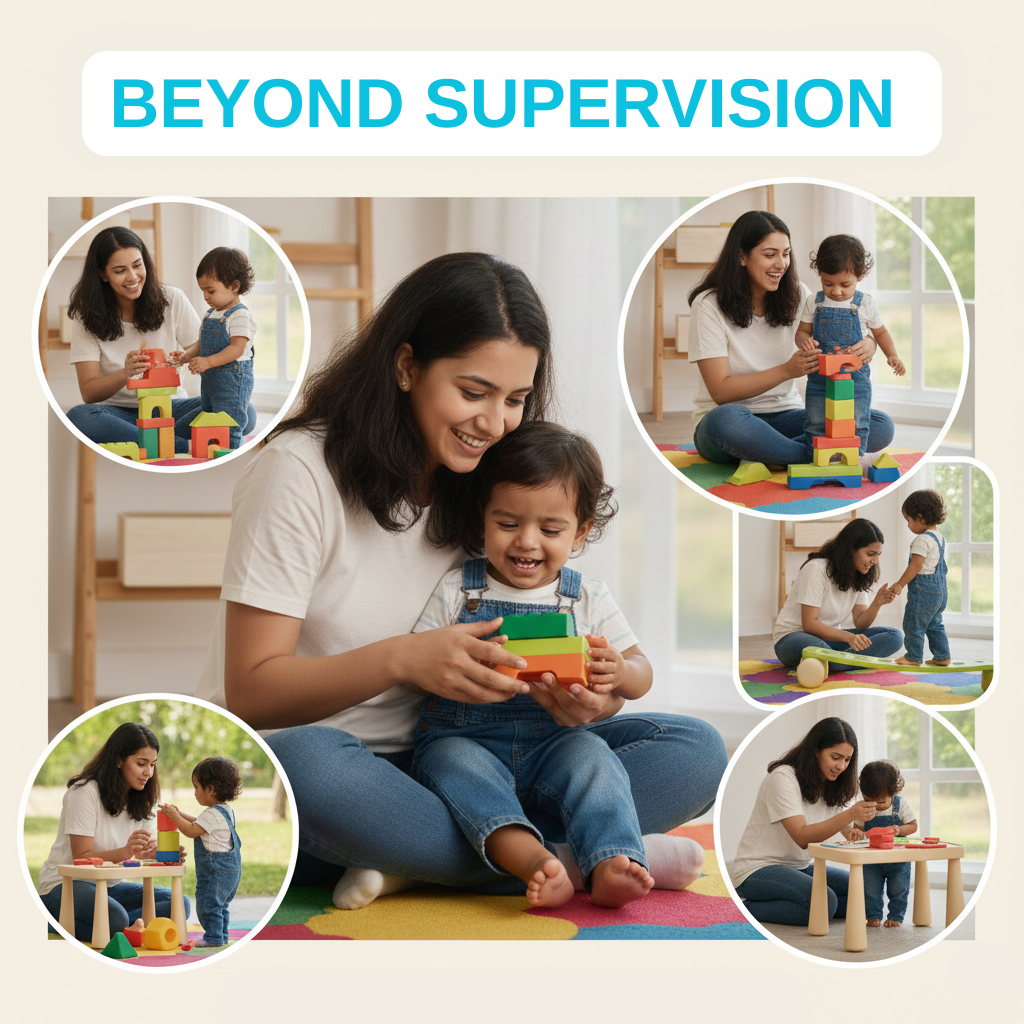
Beyond Supervision: How a Live-in Nanny Accelerates Early Childhood Milestones
Most parents think a live-in nanny's job is simple: watch the child, keep them safe, and manage daily routines.
That's a dangerously low bar.
In early childhood (0-5 years), how a child is spoken to, responded to, and guided - hour after hour - directly shapes cognitive, emotional, and physical development. Supervision alone doesn't move the needle. Intentional, consistent engagement does.
This is where a trained live-in nanny can quietly outperform even well-meaning parents juggling work, fatigue, and divided attention.
Let's be precise about how.
1)) Language Development Happens in Micro-Moments, Not “Study Time”
Children don't learn language from flashcards. They learn it from constant, responsive conversation.
A live-in nanny:
- Narrates actions throughout the day ("We're washing hands now")
- Responds immediately to babbling and early words
Repeats, expands, and corrects gently - without pressure
These micro-interactions happen hundreds of times daily.
Parents working long hours simply can't replicate that volume.
Result:
Earlier vocabulary growth, clearer sentence formation, and stronger listening skills.
2)) Emotional Regulation Is Taught Before It's Learned
Toddlers don't magically “learn patience”. They borrow it from adults around them.
A consistent live-in nanny
- Responds calmly to tantrums instead of reacting emotionally
- Names feelings ("You're upset because the toy broke")
Models coping strategies repeatedly
This repetition wires emotional intelligence early - long before school begins.
Result:
Children who self-soothe faster, show fewer extreme meltdowns, and adapt better socially.
3)) Motor Skills Improve Through Structured Daily Movement
Most parents assume physical development just “happens”.
WRONG.
A skilled nanny intentionally includes:
- Crawling, climbing, and balance play
- Hand-eye coordination activities
Fine motor tasks like stacking, sorting, and feeding
Because the nanny is present all day, these activities aren't rushed or skipped.
Result:
Stronger gross and fine motor milestones - often earlier than peers.
4)) Consistency Builds Cognitive Security
Children thrive on predictable patterns. Not chaos. Not rotating caregivers.
A live-in nanny provides:
- Stable routines for meals, naps, play and learning
- Familiar responses that reduce anxiety
One primary caregiving rhythm the child can rely on
This consistency frees mental energy for exploration and learning.
Result:
Better focus, faster learning, and higher curiosity.
One-on-One Attention Changes Everything
Let's be blunt:
Daycare ratios dilute attention.
A live-in nanny:
- Adjusts activities to the child's pace
- Spots delays early (Speech, motor, behavioral)
- Reinforces strengths instead of managing a group
Early detection means early correction - which is critical in brain development.
Result:
Stronger milestone alignment and fewer developmental gaps.
The Real Difference: Presence with Purpose
A live-in nanny isn't valuable because she is always there.
She's valuable because she is present with intention.
When supervision turns into:
- Guided interaction
- Emotional coaching
- Development-aware routines
Children don't just grow - they advance.
Reality Check
If your nanny is only “keeping the child busy”, you're overpaying.
If she understands child development - even informally - you're investing in your childs's foundation.
The early years don't offer second chances.
???? Looking for more than supervision? Talk to us about trained, verified live-in nannies who support real child development - not just routines.
.png)
) (1).png)